David Griesing | Work Life Reward Author | Philadelphia

  • Blog
  • About
    • Biography
    • Teaching and Training
  • Book
    • WorkLifeReward
  • Newsletter Archive
  • Contact
You are here: Home / Archives for 2021

Archives for 2021

Embodied Knowledge That’s Grounded in the Places Where We Live & Work

February 22, 2021 By David Griesing Leave a Comment

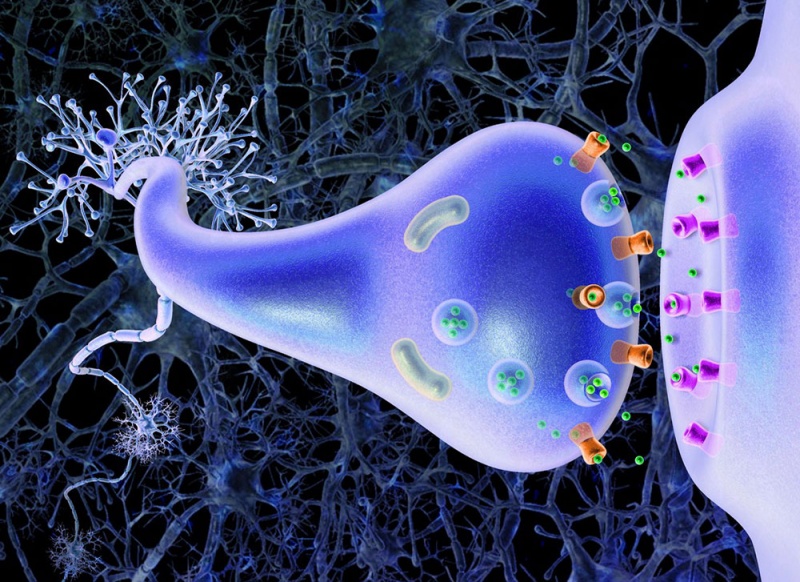
“Embodied knowledge” is a kind of understanding where the body knows what is happening, and sometimes even how to react to it, without really thinking about it. There is no need to verbalize or connect a string of thoughts. You just know or “feel it in your bones.” It happens via the neurotransmitters in our brains, as depicted in the striking image above by Arran Lewis. 

Here are some examples of embodied knowledge:

– I’ve already learned how to distribute my weight on the seat of a bike, put my feet on the pedals, lean forward, so I no longer have to think about how to do it, I just know how get on my bike and ride. 

– I know that when I get a certain kind of headache, a high-pressure weather front is moving in and I need a pain reliever. My head is like a barometer “automatically” telling me what to do.

– A farmer nearby might know from the way his chickens are acting or his kids are behaving that the run-off from a nearby plant has been getting into their water, whatever the township or elected officials are saying about it.

It’s the kind of knowledge that internalizes complicated experiences without the need for an elaborate thought process.

This last example of embodied knowledge—where a deep understanding of the land and the people and fauna that live there differ from what the authorities are telling you about it—has been Kate Brown’s preoccupation for much of the past twenty years.

Brown is a professor at MIT, interested in “where history, science, technology and bio-politics converge to create large-scale disasters and modernist wastelands.” She is a storyteller who has put herself into her stories so she can interview and experience the lives of people with “embodied knowledge” in places like Chernobyl and the Nevada dessert after terrible nuclear accidents. From their first person accounts and her reactions to them, she identifies discrepancies from the expert “investigations,” challenges the official narrative once politicians get involved, and shows how the embodied knowledge of those affected by disasters resonates beyond the borders that we usually place around them. 

This week, I heard Brown speak about her work as part of a interview series sponsored by Duke University. That continuing series explores ethical responses to The Anthropocene, or the time in Earth’s evolution where human forces have matched (or overtaken) natural forces in determining the fate of the planet. The Series question to Kate Brown and others has been: What can we, what should we be doing about it?

Brown’s most straightforward answer would be: listen to the people with embodied knowledge. The people who are “closest to the ground of disaster” can tell us much that we need to know about how to deepen our own sense of place in order to survive in a world that has already entered a kind of death spiral. Their world of disaster is increasingly our world too. The ways that embodied knowledge have been gained in Earth’s disaster zones can become a kind of template in our own quests to survive in environments that have been degrading more rapidly than most of us would like to admit. 

Kate Brown’s books have won a cascade of awards for history writing and non-fiction. They include: A Biography of No Place: From Ethnic Borderland to Soviet Heartland (2004); Plutopia: Nuclear Families in Atomic Cities and the Great Soviet and American Plutonium Disasters (2013); Dispatches from Dystopia: Histories of Places Not Yet Forgotten (2015); and her acclaimed Manual for Survival: A Chernobyl Guide to the Future (2019). 

I found three things about Kate Brown’s life and research to be particularly noteworthy. First, why has she focused her work on the embodied knowledge of people in disaster zones? (My real question: how do people find their work priorities?) Secondly, as I’ve been thinking about deepening my own “sense of place,” I was fascinated by the role that specific environments and peoples’ deep-seated knowledge of their places play in Brown’s history-writing and storytelling. And lastly, because Brown has traveled to and reported from Earth’s calamitous edges—she calls herself “a professional disaster tourist”—I wondered some more about the message that she’s been carrying back for the rest of us.

What can or should we be doing in order to survive?

Kate Brown

Why any of us gravitates towards the work we end up doing may itself be explained by a kind of “embodied knowledge.” 

For Kate Brown, I wondered what it was in her experience that made her seek out people who were burdened by the nuclear catastrophe at Chernobyl or the plutonium incidents in Nevada where (according to her) the fallout of “radioactive iodine from atmospheric detonations of nuclear bombs dwarfed Chernobyl emissions three times over”? Clearly, it was not the origin story of someone who would automatically believe that Soviet propaganda is more misleading than the American variety.
 
Brown’s formative years were spent in a small Midwestern town that was gutted after its economy collapsed. She literally grew up among its ruins. As Brown recounts:

The year I was born, 1965, the Elgin watch factory [in Elgin, Illinois] shuttered, and they blew up the watch tower. It was a company town, and that was the main business. I grew up watching the supporting businesses close, and then regular clothing stores and grocery stores went bankrupt. 

It was nothing near what I describe in wartime Ukraine, or Chernobyl, or one of [the] plutonium plants, but I finally realized I was so interested in modernist wastelands because of my own background.

Before she was born, Brown’s mother had already moved four times because of “deindustrialized landscapes,” and her parents “moved to Elgin thinking it was healthy, small-town America. So how many times do they have to jump?…What if you care about your family and [your] community” and didn’t want to abandon them? So she gravitated towards groups of people who stuck it out in the much the same way that her family did.

The drive behind Brown’s work made me think about naturalist and writer Barry Lopez, who has also chronicled our impending environmental disaster. Only in 2013, towards the end of his long career, was he able to describe how he’d been repeatedly victimized as a child in a Harpers magazine article. He told us that the “sliver of sky” in its title was what he was reaching for in his own work from “the edges of our throttled Earth,” an unwaivering attempt “to find a way to turn the darkness [he’d experienced himself] inside out.” 

In her stories about other places that have been grievously injured, I was also reminded of Arlie Hochschild’s Strangers in Their Own Land. Not only do the Americans who live there deserve our understanding during this politically divisive time, but Hochschild’s approach as a sociologist to those who live in the most damaged parts of Louisiana, is startlingly similar to Lopez’s as a naturalist and Brown’s as an historian. Each of them put themselves in the stories they are telling, frankly acknowledging their personal perspectives as interviewers and interpreters, while (in the process) giving their audiences narratives that are intimate and involving precisely because of the personal roles they have chosen to play in them.

Brown, Lopez and Hochschild have been continuing to write their own stories as they invite the rest of us into them.

At Chernobyl

Many of you know that I’ve been thinking a great deal about “sense of place” recently. (Last week, I gave my reactions to the movie “The Dig” and its meditations on what any of us might want to preserve in the face of disaster, like these Englishmen and women were doing before the bombing of Britain in World War II. In mid-December, I ruminated about how the places where we live and work become more meaningful as we learn how to capture and retain their most vivid memories.)
 
Something about “sense of place” for Brown can be understood from the images in her book titles: No Place, Borderland, Dystopia. The places she’s explored have been the toxic waste dumps of industrial civilization. The area around Chernobyl is called Polesia, swamplands populated by a mix of Poles, Germans, Jews and Ukrainians that was either forgotten or dismissed by the urban centers of Kiev and Moscow, with few outsiders expressing any interest in what its people had to say for themselves. Brown did listen, recognizing their “embodied knowledge” when they described what was happening to them, introduced her to their “radiant children” (or those who’d been stunted by radiation), and told her how they continued to survive in a contaminated landscape that the “outside world” wanted everyone to believe had fully recovered. 
 
In one poignantly conflicted moment, Brown describes the tremendous generosity of a local family as they offered to share their homegrown feast with her and her reluctance to eat it and appear ungracious because she knew how contaminated by radiation the region’s entire food chain had become. With images like this, Brown argues that “what it means to be human” in places like this is different than anything we have ever seen before, and that as the climate and Earth begin to change in equally profound ways, what it means for the rest of us to be human is already changing too. 
 
(For example, while Brown doesn’t recount them, think about how many weeks earlier the Spring will be coming this year than it did only a few years ago. Think about how much less snow there is on the ground or ice on the ponds in Northern states than we remember as kids during this time of year. Think about birds and animals you no longer see in your backyards. Think about how many more 100+ degree days there will be in Arizona this summer than there were only 10 or 15 years ago, or how many more deadly wildfires in California.) 
 
How we experience the degrading nature of the “places” where we live and work profoundly affects us in ways that have much in common with the residents of Brown’s Polesia. But unlike many of us, Brown’s Polesians had gained an embodied kind of knowledge about what they’ve been experiencing. They’ve had to in order to survive. Farm animals became their Geiger counters (as in, “the cows have been acting funny”). Brown is astonished by how women at a local textile plant have learned how to attribute various aches and pains that they experience to particular isotopes lodged in specific organs of their bodies. 
 
We will be gaining that kind of experienced knowledge too—knowledge that’s tied to the ground of our particular “places” as global warming affects them. We’ll need to deepen our sense of place in an embodied way too.

Babushkas who are living near Chernobyl

So what does Brown recommend, what else does she think we should be taking away from (and perhaps applying) after her deep, long look into the hinterlands of disaster? 
 
I believe she’d say that it’s the practical guidance we can take from people who have learned how to cope in profoundly compromised environments. It’s more of their kind of “embodied knowledge”–and maybe less of what the experts and politicians have to say about what’s happening around us– that needs to be our guide.
 
In the way she has approached her history-writing, Brown also offers a counterweight to the obliviating impact of “contested knowledge.” About the farmers and factory workers around Chernobyl she notes:

These people got cancer, these kids have cancer, but we don’t know for sure what caused it.’ I saw how those statements of scientific uncertainty drilled down, undermining the claims of people whose families were riddled with illnesses. Rather than report two sides of a controversy (there are always far more than two sides), I wanted to leave the reader with an informed judgment. As I write in the first person, it’s clear that this is my studied opinion.

Brown’s role in determining the credibility of those she interviews and telling us why she believes them, effectively validates the “embodied knowledge” gained by these victims instead of leaving them in a further hinterland of sorts—one that’s in the shadows beyond credibility—because scientists or government officials lack the time, the money or the commitment “to connect and prove” each toxic cause they claim to each damaging effect. In other words, experts and politicians don’t need to confirm what your experience at surviving tells you to rely upon; they don’t necessarily “know any better” than the folks who are aready doing the hard work of surviving on the ground.
 
An essay comparing various Chernobyl accounts to HBOs 2019 dramatization also discussed how Brown’s “putting herself in the story” allows her to involve readers and listeners in what she’s saying by provoking us to formulate our own perspectives on the events she describes. She tells us her opinion about what farm and factory workers are claiming as well as why she believes them by (for example) referring to records she’s uncovered, and by doing so, invites us to have our own opinions about their testimony.

Crucially, Brown’s interjections of first-person narration are not merely ruminative or speculative. Rather, they are constructed to prompt the critical capacities of a reader who is invited to think with the author through a literal and metaphoric journey that begins with and eventually goes beyond the Chernobyl Exclusion Zone.

By choosing this almost interactive approach, Brown’s storytelling method not only “prompts” our critical capacities involving Chernobyl, it also invites us to bring the same faculties to places far closer to home (like the Nevada contamination sites that are far less known but even more toxic) or to the negative impacts of impending climate disaster that we’re experiencing in our own backyards. We can become more like actors in (and less like the passive victims of) the place-driven stories that we’re in.

Barry Lopez–who also put himself in his stories–seemed less hopeful than Kate Brown that all of us can be mobilized in time to confront the unfolding climate crisis. Writing about his final book called Horizon, I described the smaller group of actors that he hoped to enlist, but it was never in doubt that he also believed (along with Brown) in the power of hard-won, localized wisdom to help us through the difficult days ahead.

Lopez seems less certain that he can reach the tourists in their lounge chairs around the pool and more reliant on networks of wisdom that still include his ‘family, friends, mentors and professional colleagues’ but now depends at least as much on the wisdom of traditional cultures that have found ways to survive in the face of war, environmental destruction and natural disaster. Unlike citizens of the developed world who act like children looking for heroes to save them, for thousands of years adults who know how to make decisions to care for everyone and ensure that no one gets left behind have guided [what he calls] ‘heroic communities’ of indigenous people across the world. Today, Lopez tries to counter his doubts by imagining networks comprised of all the different communities that depend on adults with the knowledge to survive so that we can claim our uncertain future together.

In the hinterlands of our civilization—where we’ve dumped our refuse and conducted the industrial experiments that help us support our consumer-driven economies and comfortable lifestyles—there are people who have learned and are continuing to learn how to survive in places that many of us would rather forget. As a contrary voice, Brown says loudly and clearly (along with Lopez and Hochschild): Come with us, use your imaginations to become involved in these frontline stories, and perhaps you can also figure out what you need “to know now” and “do now” in order to survive.

This post was adapted from my February 14, 2021 newsletter. Newsletters are delivered to subscribers’ in-boxes every Sunday morning and occasionally I post the content from one of them here. You can subscribe too by leaving your email address in the column to the right.

Filed Under: *All Posts, Being Part of Something Bigger than Yourself, Daily Preparation, Work & Life Rewards Tagged With: Anthropocene, Arlie Hochschild, Barry Lopez, Chernobyl, disaster environments, disaster history, embodied knowledge, history, Kate Brown MIT, networks of wisdom, storytelling, survival in Anthropocene

A Movie’s Gorgeous Take on Time, Place, Loss & Gain

February 9, 2021 By David Griesing Leave a Comment

As a kid, I was a digger. Always outside in the meadow that ran the back of my house, in the woods that huddled behind the half-circle of homes down the hill, or even in the less visited recesses of my yard, I was always looking for something “down there.” But I never found anything like the spines of the Anglo-Saxon long ship that were unearthed in the picture above.
 
In a post from December called Digging for a Sense of Place, I described how I didn’t really find anything you’d call “archeological” until I got to Philadelphia and came upon what might have been an 18th century kitchen dump beneath our magnolia tree out back. (My home is a block and a half from an historical marker that tells of British troops camping here before the Battle of Germantown, so I suppose the pottery shards I found there could also have been left behind when these very soldiers moved to their next encampment.) Anyway, while thinking about my relationship to the places where I’ve lived, I also saw some of the roots of my commitment to and indifference about the ravages of climate change—and how I might get that wavering to settle down into something more like steady resolve.

Because our plots of land are relative strangers to us, we don’t embrace them with the same protective bonds that draw us, to say, a child under threat. Instead, they are… little more than addresses, places to arrive at or depart from but not necessarily learn more about, even while we’re spending most of our time there.

Maybe because I’d written this post so recently, I couldn’t believe the coincidence when a British filmmaker presented his movie, called The Dig, on Netflix this week. Told with unsettling beauty, it’s a story about the quixotic excavation of an ancient burial mound on a manor estate in southeast England. With remarkable restraint, it uses its Dark Age discoveries to throw the early bombing raids over Britain during World War II (whenThe Dig takes place) into bold relief.  
 
These bombers, like heavy, lumbering cows, crisscross the skies above the excavation site, falling down to earth on one occasion while simultaneously calling more young Englishmen up into the clouds to risk their lives. Much like them, we also need the memories of our place in the world to anchor an uncertain future. With new viral strains announced almost daily and the need to inoculate an entire planet before “normal” or “safe” can return, it still remains unnervingly unclear how any of us will come out the other end.  As with the pilots and diggers of rural England in the 1940s, it might get us thinking about what we’d most like to carry with us–what we’d most like to preserve–as we too face the unknown.
 
This trailer for The Dig will give you the flavor of its juxtapositions on time, place, loss as well as the kind of gain that becomes possible when you seize the day.

Mulligan, Barnes and Fiennes

Among many other things, this is an actors’ movie, particularly for Mulligan, Barnes and Fiennes. 
 
Mulligan’s Edith Pretty is weighed down by the emotional and physical ailments that have increasingly burdened her since her husband, a soldier himself, died shortly after they married and their son was born. It is her estate that houses the ancient burial mounds, she’s always wondered what secrets they might hold, and perhaps because of her own dwindling, she finally resolves to find out. Mulligan’s startling performance pushes Edith to the boundaries of her fragile condition and to small bursts of vitality beyond it. 
 
Edith finds the complement she needs “for a dig” in Basil Brown, “a self-taught excavator” who knows “everything there is to know” about the ground and soil of Suffolk since, as he takes pains to explain, his hands have been combing through it for over sixty years. A hard-working man, he learns how to find common ground with Edith across the gapping class divides of rural England in a dance of blunt and sometimes comical exchanges. Basil Brown is played by Ralph Fiennes, who has inhabited everyone from Voldermort to Jonathan Steed (the TV Avengers protagonist) and the English Patient in his years playing leading men on the big-screen. Given those marquee roles, his understated Basil is a departure.
 
When interviewed about it, Fiennes (himself a Suffolk native) said he spent weeks riding an old bike along the country roads of southeast England to refresh his feelings for the place and its rhythms before filming began. In other interviews The Dig’s creative force, Simon Stone, said he encouraged his actors to ad-lib the script when it felt right to them. For the character of Basil in particular, deep knowledge of the land and the freedom to be spontaneous produce a kind of honest power that is evident throughout this performance, which is the best of his that I’ve seen in his long career.
 
The eight (or so)-year-old actor Archie Brown plays Edith’s son Robert. A dazzling counterpoint to the mumbling Basil and his frail mother, Robert brings the fireworks of childish excitement and gushing enthusiasm to this dig for buried treasure. In their small community quest, he also discovers a father figure, awakening in Basil the best kind of paternalism when the old codger least expects it. A sequence where Robert takes off from home on his bike in search of Basil is gorgeously realized and almost unbearably sad in its desperate longing. But while the buried treasures here are frequently emotional, there are also splendid discoveries to be made as this ragtag band carves its way beneath the ground.
 
What The Dig’s spirited amateurs discover became known as the Sutton Hoo Treasure, stored in the buried hull of a sixth-century Anglo-Saxon ship to honor a Dark Age king. As a long-time believer in buried treasure, if I have a complaint about this movie it’s that we get to see too little of this magnificent horde—mostly as it temporarily rests on the mossy beds of wooden crates that are placed, one after another, under Edith’s bed, near a suitcase that had been her husband’s. 
 
She ultimately gives the Sutton Hoo Treasure to the British Museum despite sniveling among the “professional” archeologists and museum curators that provide the film’s suspense (“What will become of this magical discovery at a time when we all need to feel the joy of it?”) Representing an almost entirely unknown chapter of the nation’s memory, there is never really any doubt where it’s headed. The Sutton Hoo Treasure will go to the place where the greatest number of Edith’s and Basil’s countrymen and women can gather around its campfire and face whatever tomorrow holds together.

A golden sea creature
Clasps for a king’s cloak

Well into The Dig, Basil’s bedrock of a wife wonders at his conviction and tenacity, over “just how he is,” not really asking as much as telling him: “Why else would you be playing around in the dirt while the rest of the country prepares for war?” 
 
So it’s fitting that his and Edith’s quiet obsessions play out not in a “post-card pretty England” but in more of a dreamscape of grays and ochers during the day or in a nightmare when it’s dark and raining and Basil is trying to pull reluctant tarps over the excavation site despite being blinded by the spattering mud. What’s at stake here is not the rose-colored surfaces of England’s countryside but what supports that splendor underneath: its long buried past and the quiet furnaces that animate the men and women who have lived for centuries “closest to its ground.”
 
In an echo of the Anglo-Saxon ship that’s being unearthed, my favorite scene in the movie is of a contemporary sailboat drifting along the same nearby river that carried the burial chamber of an ancient king to what might have been his final resting place 1500 years before. It was like a message-in-a-bottle or maybe a promise of things to come. Like Basil for a moment, I could almost hear the past reverberating into the present and maybe even the future. 
 
When you see The Dig, you’ll know what I mean about “how Basil is,” the silent quest that drives Edith, and how valuable spirit voices like theirs might be in each of us too as we worry and wonder about what’s worth preserving in our fragile world today so we can take it into the future.

This post was adapted from my February 7, 2021 newsletter. Newsletters are delivered to subscribers’ in-boxes every Sunday morning and occasionally I post the content from one of them here. You can subscribe too by leaving your email address in the column to the right.

Filed Under: *All Posts, Being Part of Something Bigger than Yourself, Being Proud of Your Work, Building Your Values into Your Work, Continuous Learning, Daily Preparation, Heroes & Other Role Models Tagged With: archeology, carpe diem, groundedness, history, loss, perspective, rootedness, sense of place, Sutton Hoo Treasure, The Dig, time, uncertain future, uncertainty

Who’s Winning Our Tugs-of-War Over On-Line Privacy & Autonomy?

February 1, 2021 By David Griesing Leave a Comment

We know that our on-line privacy and autonomy (or freedom from outside control) are threatened in two, particularly alarming ways today. There are the undisclosed privacy invasions that occur from our on-line activities and the loss of opportunities where we can speak our minds without censorship.

These alarm bells ring because of the dominance of on-line social media platforms like Facebook, YouTube and Twitter and text-based exchanges like What’s App and the other instant messaging services—most of which barely existed a decade ago. With unprecedented speed, they’ve become the town squares of modern life where we meet, talk, shop, learn, voice opinions and engage politically. But as ubiquitous and essential as they’ve become, their costs to vital zones of personal privacy and autonomy have caused a significant backlash, and this past week we got an important preview of where this backlash is likely to take us.

Privacy advocates worry about the harmful consequences when personal data is extracted from users of these platforms and services. They say our own data is being used “against us” to influence what we buy (the targeted ads that we see and don’t see), manipulate our politics (increasing our emotional engagement by showing us increasingly polarizing content), and exert control over our social behavior (by enabling data-gathering agencies like the police, FBI or NSA). Privacy advocates are also offended that third parties are monetizing personal data “that belongs to us” in ways that we never agreed to, amounting to a kind of theft of our personal property by unauthorized strangers.

For their part, censorship opponents decry content monitors who can bar particular statements or even participation on dominant platforms altogether for arbitrary and biased reasons. When deprived of the full use of our most powerful channels of mass communication, they argue that their right to peaceably assemble is being eviscerated by what they experience as “a culture war” against them. 

Both groups say they have a privacy right to be left alone and act autonomously on-line: to make choices and decisions for themselves without undue influence from outsiders; to be free from ceaseless monitoring, profiling and surveillance; to be able to speak their minds without the threat of “silencing;” and, “to gather” for any lawful purpose without harassment. 

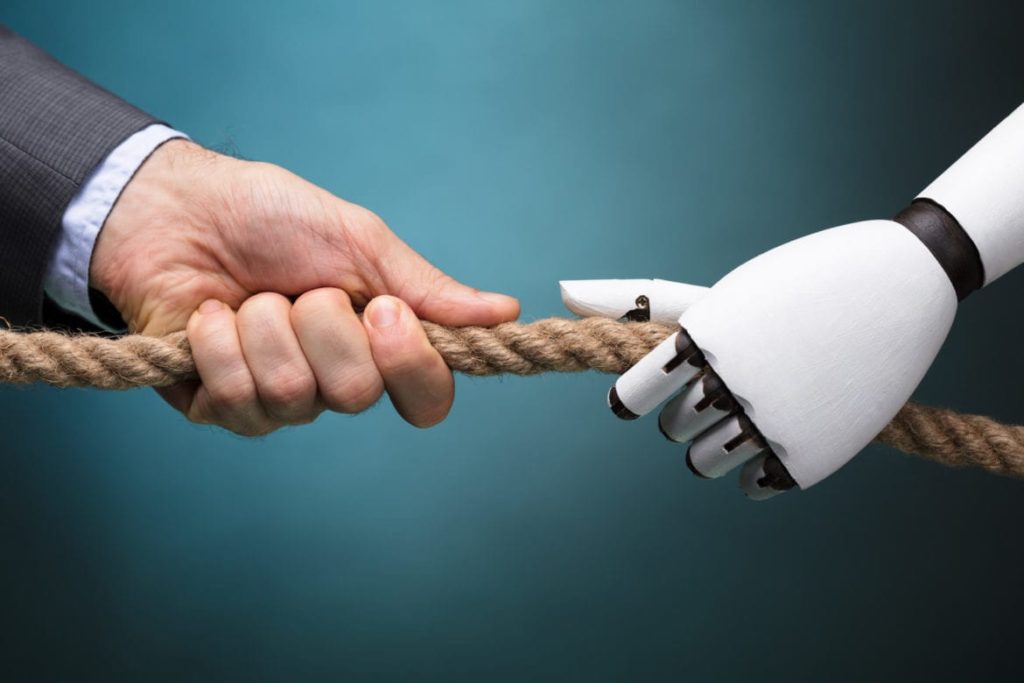
So how are these tugs-or-war over two of our most basic rights going?

This past week provided some important indications.

This week’s contest over on-line privacy pit tech giant Apple against rivals with business models that depend upon selling their users’ data to advertisers and other third parties—most prominently, Facebook and Google.

Apple announced this week that it would immediately start offering its leading smartphone users additional privacy protections. One relates to its dominant App Store and developers like Facebook, Google and the thousands of other companies that sell their apps (or platform interfaces) to iPhone users.

Going forward—on what Apple chief Tim Cook calls “a privacy nutrition label”—every app that the company offers for installation on its phones will need to share its data collection and privacy practices before purchase in ways that Apple will ensure “every user can understand and act on.” Instead of reading (and then ignoring) multiple pages of legalese, for the first time every new Twitter or YouTube user for example, will be able through their iPhones to either “opt-in” or refuse an app’s data collection practices after reading plain language that describes the personal data that will be collected and what will be done with it. In a similar vein, iPhone users will gain a second advantage over apps that have already been installed on their phones. With new App Tracking Transparency, iPhone users will be able to control how each app is gathering and sharing their personal data. For every application on your iPhone, you can now choose whether a Facebook or Google has access to your personal data or not.

While teeing up these new privacy initiatives at an industry conference this week, Apple chief Tim Cook was sharply critical of companies that take our personal data for profit, citing several of the real world consequences when they do so. I quote at length from his remarks last Thursday because I enjoyed hearing someone of Cook’s stature speaking to these issues so pointedly, and thought you might too:

A little more than two years ago…I spoke in Brussels about the emergence of a data-industrial complex… At that gathering we asked ourselves: “what kind of world do we want to live in?” Two years later, we should now take a hard look at how we’ve answered that question. 

The fact is that an interconnected ecosystem of companies and data brokers, of purveyors of fake news and peddlers of division, of trackers and hucksters just looking to make a quick buck, is more present in our lives than it has ever been. 

And it has never been so clear how it degrades our fundamental right to privacy first, and our social fabric by consequence.

As I’ve said before, ‘if we accept as normal and unavoidable that everything in our lives can be aggregated and sold, then we lose so much more than data. We lose the freedom to be human.’….

Together, we must send a universal, humanistic response to those who claim a right to users’ private information about what should not and will not be tolerated….

At Apple…, [w]e have worked to not only deepen our own core privacy principles, but to create ripples of positive change across the industry as a whole. 

We’ve spoken out, time and again, for strong encryption without backdoors, recognizing that security is the foundation of privacy. 

We’ve set new industry standards for data minimization, user control and on-device processing for everything from location data to your contacts and photos. 

At the same time that we’ve led the way in features that keep you healthy and well, we’ve made sure that technologies like a blood-oxygen sensor and an ECG come with peace of mind that your health data stays yours.

And, last but not least, we are deploying powerful, new requirements to advance user privacy throughout the App Store ecosystem…. 

Technology does not need vast troves of personal data, stitched together across dozens of websites and apps, in order to succeed. Advertising existed and thrived for decades without it. And we’re here today because the path of least resistance is rarely the path of wisdom. 

If a business is built on misleading users, on data exploitation, on choices that are no choices at all, then it does not deserve our praise. It deserves reform….

At a moment of rampant disinformation and conspiracy theories juiced by algorithms, we can no longer turn a blind eye to a theory of technology that says all engagement is good engagement — the longer the better — and all with the goal of collecting as much data as possible.

Too many are still asking the question, “how much can we get away with?,” when they need to be asking, “what are the consequences?” What are the consequences of prioritizing conspiracy theories and violent incitement simply because of their high rates of engagement? What are the consequences of not just tolerating, but rewarding content that undermines public trust in life-saving vaccinations? What are the consequences of seeing thousands of users join extremist groups, and then perpetuating an algorithm that recommends even more?….

[N]o one needs to trade away the rights of their users to deliver a great product. 

With its new “data nutrition labels” and “app tracking transparency,” many (if not most) of Apple’s iPhone users are likely to reject other companies’ data collection and sharing practices once they understand the magnitude of what’s being taken from them. Moreover, these votes for greater data privacy could be a major financial blow to the companies extracting our data because Apple sold more smartphones globally than any other vendor in the last quarter of 2020, almost half of Americans use iPhones (45.3% of the market according to one analyst), more people access social media and messaging platforms from their phones than from other devices, and the personal data pipelines these data extracting companies rely upon could start constricting immediately.   
 
In this tug-of-war between competing business models, the outcry this week was particularly fierce from Facebook, which one analyst predicts could start to take “a 7% revenue hit” (that’s real cash at $6 billion) as early as the second quarter of this year. (Facebook’s revenue take in 2020 was $86 billion, much of it from ad sales fueled by user data.) Mark Zuckerberg charged that Apple’s move tracks its competitive interests, saying its rival “has every incentive to use their dominant platform position to interfere with how our apps and other apps work,” among other things, a dig at on-going antitrust investigations involving Apple’s App Store. In a rare expression of solidarity with the little guy, Zuckerberg also argued that small businesses which access customers through Facebook would suffer disproportionately from Apple’s move because of their reliance on targeted advertising. 
 
There’s no question that Apple was flaunting its righteousness on data privacy this week and that Facebook’s “ouches” were the most audible reactions. But there is also no question that a business model fueled by the extraction of personal data has finally been challenged by another dominant market player. In coming weeks and months we’ll find out how interested Apple users are about protecting their privacy on their iPhones and whether their eagerness prompts other tech companies to offer similar safeguards. We’ll get signals from how advertising dollars are being spent as the “underlying profile data” becomes more limited and less reliable. We may also begin to see the gradual evolution of an on-line public space that’s somewhat more respectful of our personal privacy and autonomy.
 
What’s clearer today is that tech users concerned about the privacy of their data and freedom from data-driven manipulation on-line can now limit at least some of the flow of that information to unwelcome strangers in ways that they never had at their disposal before.

All of us should be worried about censorship of our views by content moderators at private companies (whether in journalism or social media) and by governmental authorities that wish to stifle dissenting opinions.  But many of the strongest voices behind regulating the tech giants’ penchant “to moderate content” today come from those who are convinced that press, media and social networking channels both limit access to and censor content from those who differ with “their liberal or progressive points of view.” Their opposition speaks not only to the extraordinary dominance of these tech giants in the public square today but also to the air of grievance that colors the political debates that we’ve been having there.
 
Particularly after President Trump’s removal from Facebook and Twitter earlier this month and the temporary shutdown of social media upstart Parler after Amazon cut off its cloud computing services, there has been a concerted drive to find new ways for individuals and groups to communicate with one another on-line in ways that cannot be censored or “de-platformed” altogether. Like the tug-of-war over personal data privacy, a new polarity over on-line censorship and the ways to get around it could fundamentally alter the character of our on-line public squares.
 
Instead of birthing a gaggle of new “Right-leaning” social media companies with managers who might still be tempted to interfere with irritating content, blockchain software technology is now being utilized to create what amount to “moderation-proof” communication networks.
 
To help with basic blockchain mechanics, this is how I described it here in 2018.

A blockchain is a web-based chain of connections, most often with no central monitor, regulator or editor. Its software applications enable every node in its web of connections to record data which can then be seen and reviewed by every other connection. It maintains its accuracy through this transparency. Everyone with access can see what every other connection has recorded in what amounts to a digital ledger…

Blockchain-based software can be launched by individuals, organizations or even governments. Software access can be limited to a closed network of participants or open to everyone. A blockchain is usually established to overcome the need for and cost of a “middleman” (like a bank) or some other impediment (like currency regulations, tariffs or burdensome bureaucracy). It promotes “the freer flow” of legal as well as illegal goods, services and information. Blockchain is already driving both modernization and globalization. Over the next several years, it will also have profound impacts on us as individuals. 

If you’d gain from a visual description, this short video from The MIT Technology Review will also show you the basics about this software innovation.  
 
I’ve written several times before about the promise of blockchain-driven systems. For example, Your Work is About to Change Forever (about a bit-coin-type financial future without banks or traditional currencies); Innovation Driving Values (how secure and transparent recording of property rights like land deeds can drive economic progress in the developing world); Blockchain Goes to Work (how this software can enable gig economy workers to monetize their work time in a global marketplace); Data Privacy & Accuracy During the Coronavirus (how a widely accessible global ledger that records accurate virus-related information can reduce misinformation); and, with some interesting echoes today, a 2017 post called Wish Fulfillment (about why a small social media platform called Steem-It was built on blockchain software).    
 
Last Tuesday, the New York Times ran an article titled: They Found a Way to Limit Big Tech’s Power: Using the Design of Bitcoin. That “Design” in the title was blockchain software. The piece highlighted:

a growing movement by technologists, investors and everyday users to replace some of the internet’s basic building blocks in ways that would be harder for tech giants like Facebook or Google [or, indeed, anyone outside of these self-contained platforms] to control.

Among other things, the article described how those “old” internet building blocks would be replaced by blockchain-driven software, enabling social media platforms that would be the successors to the one that Steem-It built several years ago. However, while Steem-It wanted to provide a safe and reliable way to pay contributors for their social media content, in this instance the over-riding drive is “to make it much harder for any government or company to ban accounts or delete content.” 

It’s both an intoxicating and a chilling possibility.

While the Times reporter hinted about the risks with ominous quotes and references to the creation of “a decentratlized web of hate,” it’s worth noting that nothing like it has materialized, yet. Also implied but never discussed was the urgency that many feel to avoid censorship of their minority viewpoints by people like Twitter’s Jack Dorsey or even the New York Times editors who effectively decide what to report on and what to ignore. So what’s the bottom line in this tech-enabled tug-of-war between political forces?

The public square that we occupy daily—for communication and commerce, family connection and dissent—a public square that the dominant social media platforms largely provide, cannot (and must not) be governed by @Jack, the sensibilities of mainstream media, or any group of esteemed private citizens like Facebook’s recently appointed Oversight Board. One of the most essential roles of government is to maintain safety and order in, and to set forth the rules of the road for, our public square. Because blockchain-enabled social networks will likely be claiming more of that public space in the near future—even as they strive to evade its common obligations through encryption and otherwise—government can and should enforce the rules for this brave new world.

Until now, our government has failed to confront either on-line censorship or its foreseeable consequences. Because our on-line public square has become (in a few short years) as essential to our way of life as our electricity or water, its social media and similar platforms should be licensed and regulated like those basic services, that is, like utilities—not only for our physical safety but also for the sake of our democratic institutions, which survived their most recent tests but may not survive their next ones if we fail to govern ourselves and our awesome technologies more responsibly.

In this second tug-of-war, we don’t have a moment to lose.

This post was adapted from my January 31, 2021 newsletter. Newsletters are delivered to subscribers’ in-boxes every Sunday morning. You can sign up by leaving your email address in the column to the right.

Filed Under: *All Posts, Being Part of Something Bigger than Yourself Tagged With: app tracking transparency, Apple, autonomy, blockchain, censorship, commons, content monitoring, facebook, freedom of on-line assembly, human tech, privacy, privacy controls, privacy nutrition label, public square, social media platforms

  • « Previous Page
  • 1
  • 2
  • 3

About David

David Griesing (@worklifeward) writes from Philadelphia.

Read More →

Subscribe to my Newsletter

Join all the others who have new posts, recommendations and links to explore delivered to their inboxes every week. Please subscribe below.

David Griesing Twitter @worklifereward

My Forthcoming Book

WordLifeReward Book

Search this Site

Recent Posts

  • What To Write About? December 2, 2025
  • More House-Cleaning, Less Judgment in Politics November 16, 2025
  • Has America Decided It’s Finally Had Enough? October 2, 2025
  • Will Our Comics Get the Last Laugh? September 23, 2025
  • Using AI to Help Produce Independent, Creative & Resilient Adults in the Classroom September 10, 2025

Follow Me

David Griesing Twitter @worklifereward

Copyright © 2025 David Griesing. All Rights Reserved.

  • Terms of Use
  • Privacy Policy